Ditapis dengan
Properties Of Asphalt Cement
Asphalt cement's key properties include its viscosity, acting as a sticky binder; thermoplasticity, allowing softening with heat for workability; and durability, providing waterproofing and adhesion to aggregates for stable, flexible pavements resistant to rutting, cracking, and water damage. Essential characteristics for performance are stability, flexibility, fatigue resistance, skid resistan…
Deflection Method for Designing Asphalt Concrete Overlays for Asphalt Pavements
The deflection method for designing asphalt concrete (AC) overlays uses pavement deflection (how much it sinks under load) to determine required thickness, commonly using the Benkelman Beam or Falling Weight Deflectometer (FWD) to measure deformation, analyzing this profile (deflection bow) with layer properties, and applying design guides like those from the Asphalt Institute or AASHTO to calc…
Elastic and Fatigue Behavior of Emulsified Asphalt Paving Mixes
Emulsified asphalt paving mixes exhibit unique viscoelastic properties that significantly influence their performance under traffic loading. Their elastic and fatigue behaviors are primarily governed by the curing process, temperature sensitivity, and the inclusion of additives like cement. LOKASI: Lemari Referensi RF. 15
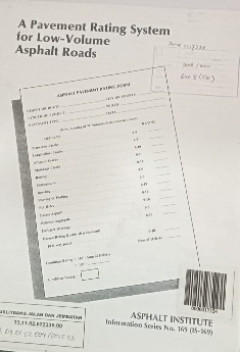
A Pavement Rating System for Low Volume Asphalt Roads
A pavement rating system for low-volume asphalt roads uses visual assessment of defects (like cracking, rutting, raveling) and their severity/extent to assign a numerical score, providing a simple, cost-effective way for local agencies to prioritize maintenance, with methods like Asphalt PASER (Pavement Surface Evaluation and Rating) and PCI (Pavement Condition Index) being common, focusing on …
Calibration Factors for Polymer-Modified Asphalts Using M-E Based Design Meth…
Calibration factors for polymer-modified asphalts (PMAs) in M-E based (Mechanistic-Empirical) pavement design, like the MEPDG, adjust distress models (rutting, fatigue, thermal cracking) for PMA's superior performance (enhanced durability, rutting/fatigue resistance) compared to conventional asphalt, requiring specific calibration coefficients for accurate prediction of longer service lives and…
Full-Depth Asphalt Pavements for Parking Lots, Service Stations and Driveways
Full-Depth Asphalt (FDA) pavement, placing asphalt directly on the subgrade, offers fast, cost-effective, and durable solutions for parking lots, service stations, and driveways, providing strength, water resistance, quick construction with no curing, and easy maintenance by handling heavy loads without joints, making it ideal for various traffic needs from cars to heavy trucks. Proper subgrade…
A Simplified Method for the Design of Asphalt Overlays for Light to Medium Tr…
A simplified asphalt overlay design method for light to medium traffic focuses on fatigue cracking and reflection cracking, using existing pavement condition, traffic data (ESALs), and material properties (like binder/aggregate) to determine required thickness, often leveraging computer programs and established principles like linear elastic layered theory to balance structural needs with cost-…
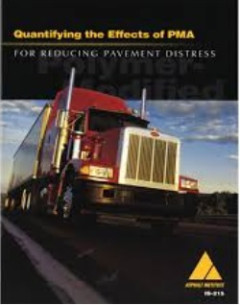
Quantifying the Effects of PMA for Reducing Pavement Distress
Polymer-Modified Asphalt (PMA) significantly reduces pavement distress like rutting, fatigue cracking, and thermal cracking, extending pavement service life by years (often 3-10 years) compared to conventional asphalt, as quantified by studies from the Asphalt Institute and state DOTs. Quantification involves field data analysis and mechanistic-empirical (M-E) modeling, showing PMA's superior r…
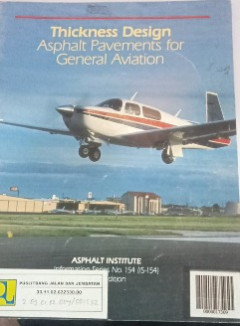
Thickness Design Asphalt Pavements for General Aviation
Designing asphalt pavement for general aviation (GA) involves matching thickness to aircraft weight, traffic, soil, and climate, using FAA guidelines and software like FAARFIELD, with thinner asphalt (sometimes 3+ inches surface) requiring thicker base/subbase layers for load distribution, contrasting with concrete's rigid nature, and referencing the classic Asphalt Institute "Thickness design:…
Alternatives in Pavement Maintenance, Rehabilitation, and Reconstruction
Alternatif perkerasan berkisar dari perawatan pencegahan sederhana (penambalan retakan, lapisan kabut) untuk perkerasan dalam kondisi baik hingga rehabilitasi (pelapisan ulang, daur ulang seperti CIR/HIR, penggerindaan) untuk kondisi sedang, dan rekonstruksi penuh untuk perkerasan yang buruk, yang seringkali melibatkan desain dan material baru (seperti RAP/RC). Alternatif utama meliputi daur ul…