Ditapis dengan

Design of Full-Depth Asphalt Airfield Pavements
Design of Full-Depth Asphalt (FDA) airfield pavements involves constructing the entire pavement structure above the subgrade using asphalt mixtures, replacing traditional granular base and subbase layers with lifts of asphalt. LOKASI: Lemari Referensi RF. 15
Differences Between Petroleum Asphalt, Coal-Tar Pitch and Road Tar
Petroleum asphalt (bitumen) comes from crude oil, is aliphatic, and used widely in roads; coal-tar pitch comes from coal, is aromatic, more stable, but carcinogenic; while "road tar" usually refers to old coal tar or wood tar, now replaced by bitumen for roads due to environmental concerns, with pitch being a further refined, solid form of tar used for specialized sealing. The main difference i…
The Effect of Baghouse Fines on Asphalt Mixtures
Baghouse fines, collected dust from asphalt plants, act as mineral filler, significantly affecting asphalt mix properties by increasing stiffness, reducing voids, influencing optimum asphalt content, and impacting moisture resistance, with positive outcomes like improved stability possible if characterized well, but potential negatives include increased brittleness and moisture sensitivity if o…
A Method for Designing Asphalt Pavements to Minimize Low Temperature Shrinkag…
Designing asphalt to resist low-temperature cracking involves using specific materials (modified binders, fibers, nanomaterials), optimizing mix design (dense-graded, reduced particle size), structural layering (thick upper layers, functional layers), and construction techniques (continuous paving, proper compaction) to reduce tensile stresses and improve binder flexibility, often guided by adv…

Sampling and Testing Aggregates
Sampling and testing aggregates ensures they meet specifications for construction projects, involving collecting representative samples (from stockpiles, belts, trucks) following standards like ASTM D75 or AASHTO T2, then reducing them in the lab for tests like sieve analysis (particle size), specific gravity, water absorption, and soundness to determine suitability for concrete, asphalt, or ba…

Specific Gravity of Fine and Coarse Aggregates
Specific gravity (SG) for aggregates, a measure of density relative to water, generally ranges from 2.5 to 3.0, indicating quality, with higher values suggesting stronger, denser material, crucial for concrete mix design and volume calculations. Testing involves weighing dry, saturated surface-dry (SSD), and submerged samples to find Bulk SG, Apparent SG, and water absorption (pores holding 1-2…
SAN DIEGO COUNTRY EXPERIMENTAL BASE PROJECT: Part I: Construction, Materilas …
The San Diego County Experimental Base Project was a significant pavement research initiative conducted between 1966 and 1973 on Sweetwater Road to evaluate various base types and thicknesses under real-world conditions. LOKASI: Lemari Referensi RF. 15
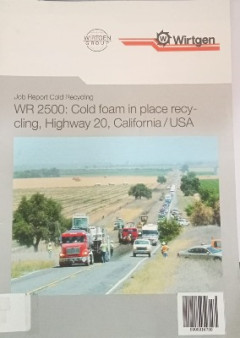
WR 2500: Cold Foam in Place Recycling, Highway 20, California / USA
The query refers to a road rehabilitation project on Highway 20 in California that utilized the Wirtgen WR 2500 cold recycler machine for a cold foam in-place recycling application. The "WR 2500" is the model number of the machinery used, not a formal project name itself. This project was a demonstration or a specific job that showcased the cold recycling technology using foamed bitumen as a bi…
Low Temperature Mechanical Properties of Asphalt Concrete
At low temperatures, asphalt concrete becomes stiffer, stronger (higher modulus/intensity), but more brittle, leading to reduced failure strain and increased risk of thermal cracking as restrained shrinkage creates tensile stress. Key mechanical properties shift from viscoelastic to more elastic/brittle behavior, with significant temperature sensitivity below certain thresholds (e.g., 15.4°C),…
Emission From Asphalt Roofing Kettles
Asphalt roofing kettle emissions release harmful Volatile Organic Compounds (VOCs), Polycyclic Aromatic Hydrocarbons (PAHs), particulates, sulfur dioxide (SO2), carbon monoxide (CO), and nitrogen oxides (NOx), posing health risks like headaches, skin issues, respiratory problems, and potential cancer to workers and surrounding areas, primarily through inhalation and skin contact, with significa…