Text
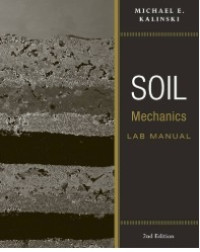
Soil Mechanics Lab Manual
Like other construction materials, soil possesses mechanical properties related to strength, compressibility, and permeability. It is important to quantify these properties to predict how soil will behave under field loading of the safe design of soil structures (e.g. embankments, dams, waste containment liners, highway base courses, etc.), as well as other structures that will overlay the soil. Michael Kalinski has written his Soil Mechanics Lab Manual to introduce students to the most common soil mechanics tests, with laboratory exercises and data sheets, and online videos, for each test. This manual comprises 13 chapters, each describing one test for a soil property, and is structured in the same manner including nine sections, viz., applicable ASTM standards, purpose of measurement, definitions and theories, equipment and materials, procedure, expected results, likely sources of error, additional considerations, and suggested exercises. The soil properties analysed include soil water content, specific gravity, liquid and plastic limit, grain size distribution, soil class, soil compaction, dry unit weight, hydraulic conductivity, shear strength, and compressive strength. Laboratory exercises and data sheets are also included at the end of each chapter. These data sheets are designed to be used for practical as well as educational purposes, with places to insert information regarding project, boring number, and soil Recovery Depth/Method.
LOKASI: Lemari Referensi
RF. 13
Ketersediaan
Informasi Detail
- Judul Seri
-
-
- No. Panggil
-
R 624.121 (036) LAW s
- Penerbit
- America : John Wiley & Sons., 2011
- Deskripsi Fisik
-
193p.: 20 x 24,5 cm
- Bahasa
-
English
- ISBN/ISSN
-
978-0-470-55683-2
- Klasifikasi
-
R 624.121 (036)
- Tipe Isi
-
-
- Tipe Media
-
-
- Tipe Pembawa
-
-
- Edisi
-
2nd ed
- Subjek
- Info Detail Spesifik
-
-
- Pernyataan Tanggungjawab
-
-
Versi lain/terkait
Tidak tersedia versi lain
Lampiran Berkas
Komentar
Anda harus masuk sebelum memberikan komentar